

Bird Control for Construction & Infrastructure
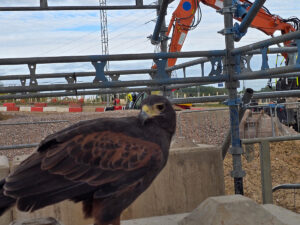
Protecting your programme from nesting birds
Nesting birds don’t care about your deadline. Once a nest becomes active on a construction or refurbishment site, it’s a legal offence under the Wildlife and Countryside Act 1981 to disturb, damage or destroy it which means work can be forced to stop on scaffolding, roofs, plant areas or void spaces for weeks at a time, often during the busiest part of the build season (typically March to August).
AM Hawk works with main contractors, ecology consultants and project teams to stop that situation ever arising. Using our falconry team, drone surveys and proofing solutions, we deter birds from settling on site before they nest protecting your programme, your budget, and your compliance position, without a single day lost to a nesting bird.
We’re not called in to clean up a problem. We’re brought on site to prevent one.
Why contractors bring us in
- Avoid enforced work stoppages once nests are active, they must be left undisturbed until the birds have fledged naturally. Our deterrent programmes are designed to prevent nests from being established in the first place.
- Stay compliant, stay defensible a documented, professional bird deterrent programme gives your ecology team and site management a clear paper trail showing reasonable steps were taken, which matters for planning conditions and CDM compliance.
- Built for live construction sites our falconers and technicians hold CSCS cards, IPAF certification for work at height, and we’re SafeContractor and ConstructionLine accredited, so we integrate into your site induction and H&S procedures without friction.
- Flexible to programme stages deterrent flying can be scaled up ahead of nesting season and adjusted as the site changes: scaffolding goes up, structures are demolished, phases complete.
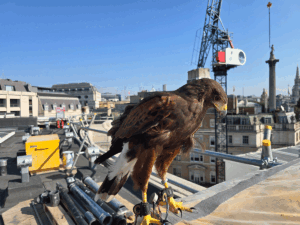
Also protecting refurbishment programmes
The same risk applies to major office and hotel refurbishment projects — anywhere scaffolding goes up, roofs are opened, or a building sits partially exposed for months, nesting birds will find it.
Office refurbishment
Strip-out and refurbishment works often leave roof voids, plant areas and scaffolding exposed for extended periods — exactly the shelter gulls, pigeons and other nesting birds look for. We work with contractors to deter birds from these areas for the duration of the works, so re-roofing, façade or M&E works aren’t held up by a nest appearing partway through the programme.
Hotel refurbishment
Live-trading hotel refurbishments bring an added pressure: guests and staff on site alongside the works. Beyond protecting the programme from nesting-related delays, our deterrent visits keep problem birds away from courtyards, terraces and guest-facing areas while the building work is ongoing.
Why Choose A & M Hawk UK
We bring a unique blend of expertise and trust to your bird control needs. Specializing in all types of bird proofing, our seasoned professionals posses an in-depth understanding of what the drone surveys for, ensuring a comprehensive inspection tailored to your specific requirements. As trusted subcontractors for leading pest control companies, we’ve already earned a reputation for reliability and excellence. When you choose us, you’re not just getting advanced drone technology; you’re gaining the assurance of industry expertise and a proven track record. Partner with A & M Hawk for unmatched precision, trust and results that speak for themselves.
Common Pest Species
The humble pigeon. Originally bread for food. Sometimes called “rats with wings” which is a bit unfair, there is not doubt they can be quite a colourful bird.
They mostly nest on ledges not in trees so this means flatish surfaces so buildings are a favoured spot.
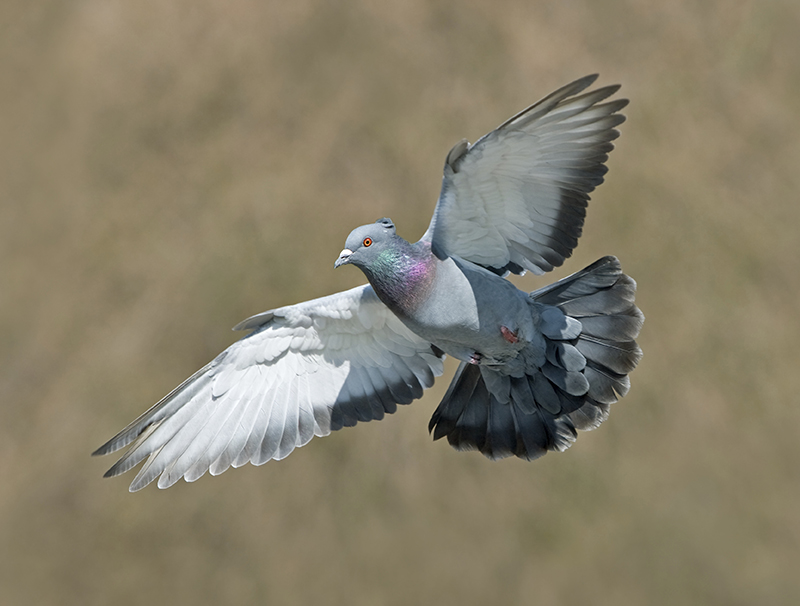
Flying pigeon
This gull is probably the most common gull seen in the towns, particularly London. Its quite a large gull which can be frieghtening as they dive in when they are protecting their nests and young. Although not a bird of prey they can and will kill other birds for food, there are plenty of video’s around of them klling and eating pigeons for instance.
They nest on flatish surfaces so roofs or open plantrooms for instance. Because of their aggression they can be a big problem during their nesting season.
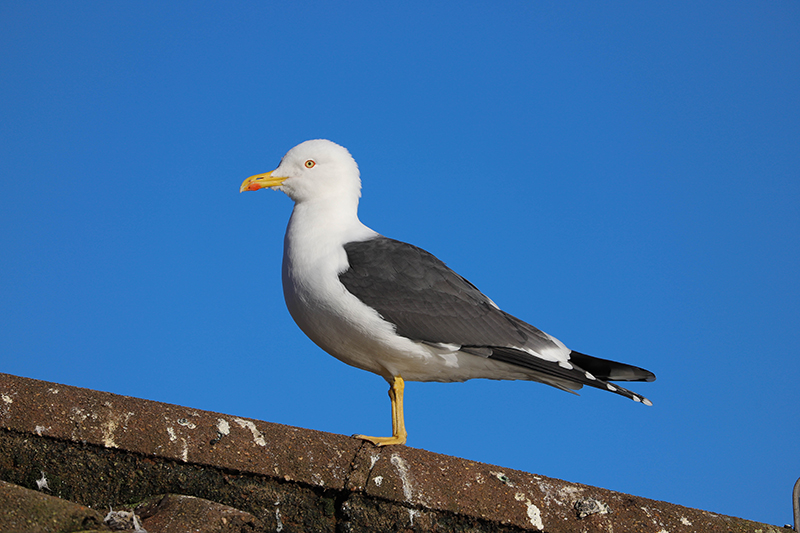
Greater Black Backed Gull (Larus marinus)
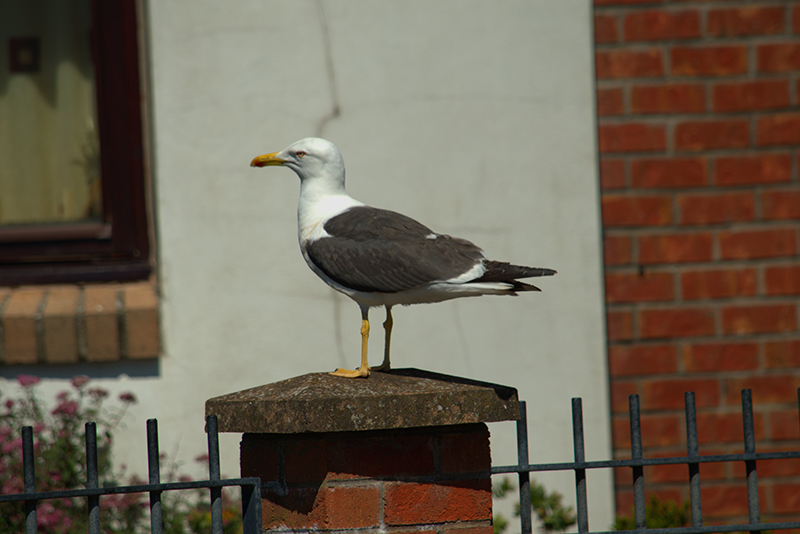
lesser black-backed gull
Smaller than the grester black-backed gull, and not so common, they are still quite intimidating.
Again as with most gulls nests on flatish surfaces.
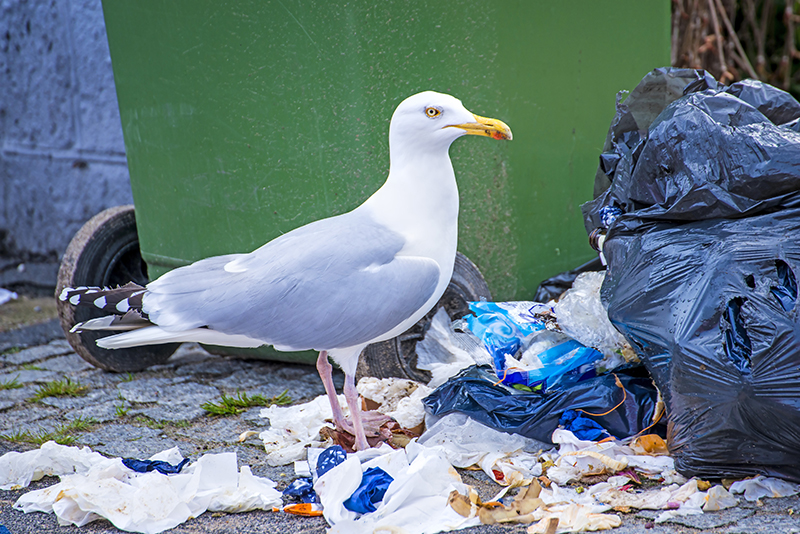
Herring gull looking for waste
The biggest of the gull family.
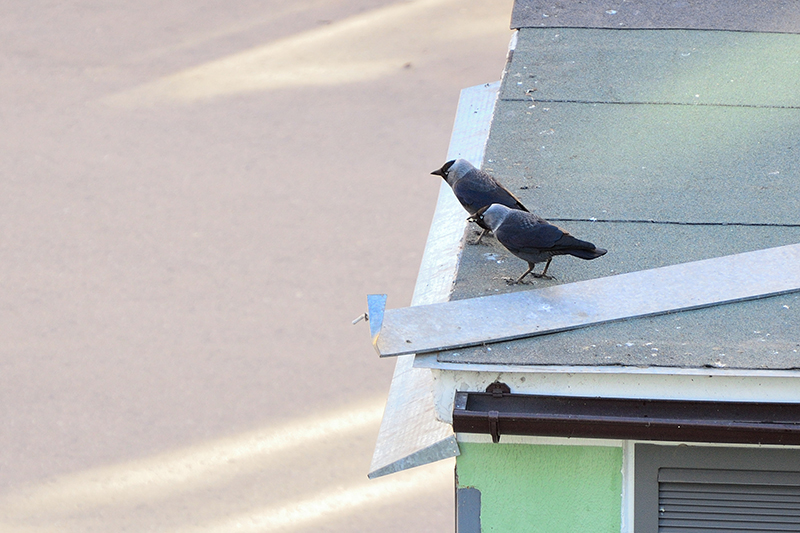
Two jackdaws
The most common of the crow family. They have hard beaks which can cause damage to buildings. Also have been known to pick up pebbels from roof tops and drop them over the side. These are typically the ones that drop down chimneys, fitting a chimney guard easily solves this.
They are quite social and will nest in the tops of trees in large numbers.
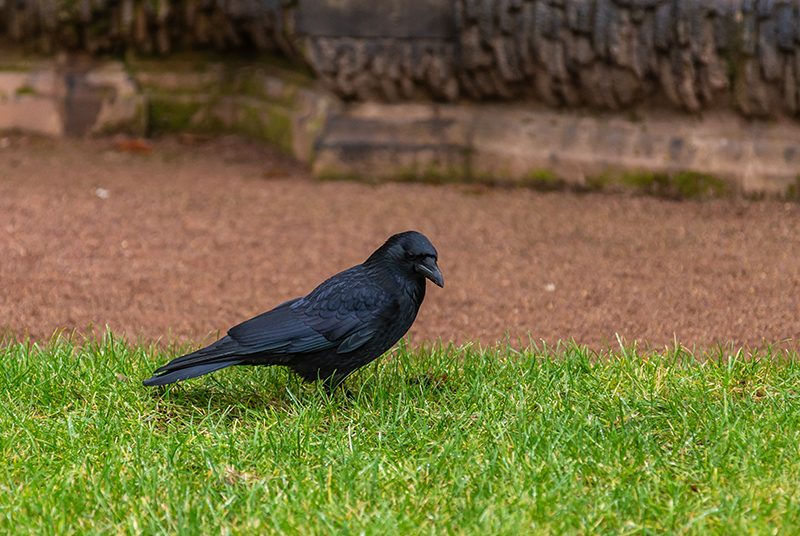
Carrion Crow
Larger than the Jackdaw and tends to be solitory or in pairs.
Canada geese can be a problem at nesting times where they come too close, or it can be the guano they produce that causes slip hazzards. They also might cause a problem if you have an airport near you.
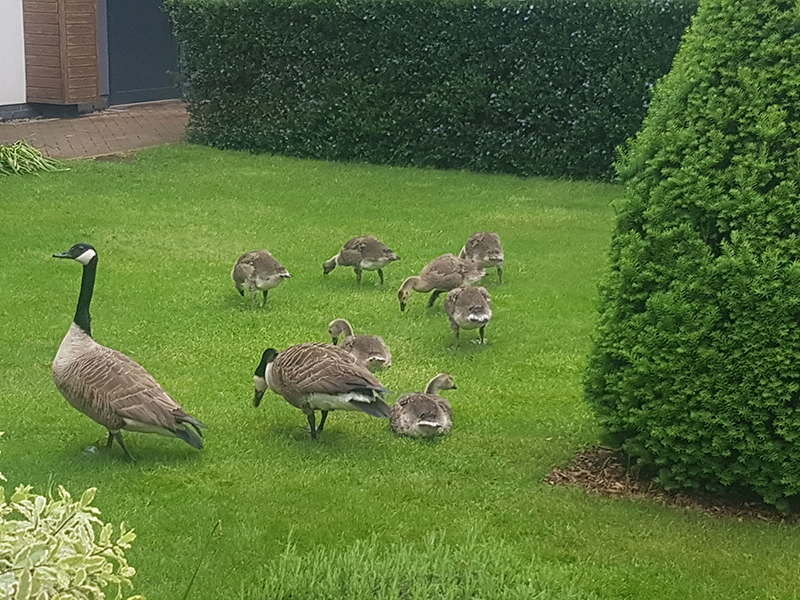
Canada geese